Design – Manufacture – Installation – Service – Spares
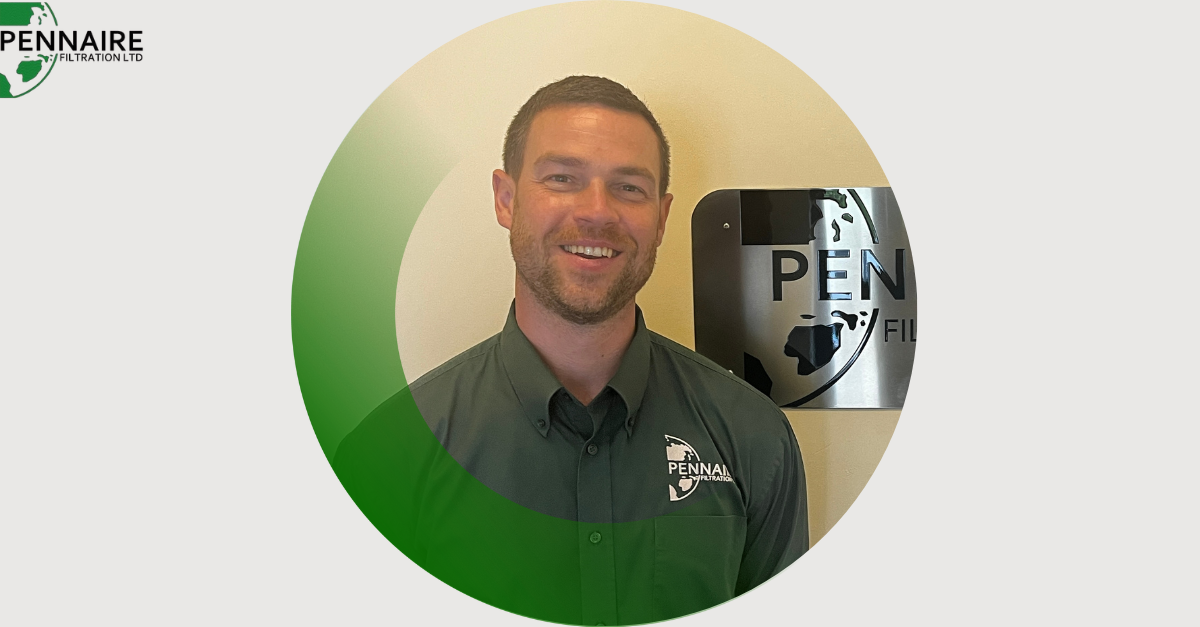
A Day in the Life of… Mike Brett | Project Engineer
Mike joined Pennaire Filtration two years ago as a Project Engineer. His role sits at the heart of how a customer’s requirements become a fully designed, manufactured, and installed filtration solution – taking projects handed over from the sales team and seeing them through from initial review all the way to final sign-off on site.
A typical day
When a new project lands with Mike, his first task is to get across every detail of what the customer needs. “When I first get a new project, I check through it to see if there are any immediate concerns and ensure that I understand what the customer wants,” he explains. A project folder is built, the quote and order acknowledgement are reviewed, and the key specifications – sizes, quantities, requirements – are confirmed before the design process begins.
That design process now takes place in SolidWorks, a step forward from the 2D AutoCAD work Mike has done previously. “It’s a longer process at the start, but it means it is quicker to manufacture,” he says. The 3D output also brings real benefits for clients, who can see exactly what they’re getting before a single component is made. Layout drawings can show how new equipment will integrate into an existing factory, and drawings from other suppliers’ ancillary equipment can be incorporated too, giving customers a complete picture before they give approval.
What customers need help with
Every project starts with understanding a customer’s specific challenge – whether that’s a new installation, a capacity increase, or a need to integrate new filtration equipment into an existing setup. Mike’s job is to translate those requirements into a precise engineering solution, coordinating manufacturers based on cost, quality, and lead time. “Different manufacturers are better suited to different types of projects,” he explains, and selecting the right partner for each job is part of getting the outcome right.
From drawing board to installation
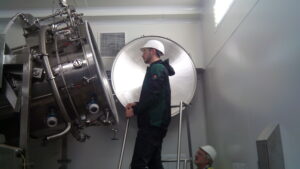
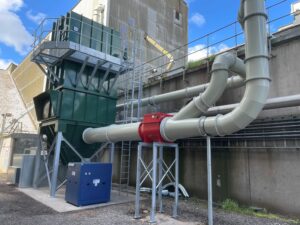
Once client approval is received, parts are ordered and manufacture begins. Drawings typically take around a week, and from approval to equipment arriving on site is generally about 12 weeks. Throughout that period, Mike monitors progress closely – including visits to manufacturers at key stages to check specifications are being met. Depending on the client’s requirements, he will also manage delivery and installation, meeting customers on site to inspect and oversee the process. Factory Acceptance Testing (FAT) is a detailed part of this stage, with masterform documents used to verify every element has been completed to standard. At the close of a project, Mike compiles the full Operation and Maintenance manual, a complete equipment list, maintenance procedures, and as-built drawings.
The most unusual request
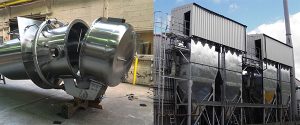
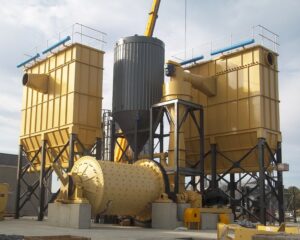
A recent project tested the limits of what can practically be transported and installed. The bag filter unit was so large it had to be shipped in sections – but even then, it didn’t fit. “The body was split into two and the hopper into three parts, and then bolted back together when it was in situ,” Mike explains. It’s not uncommon for oversized equipment to present logistical challenges – transportation of large filtration units can be complex enough to require a police escort.
The best part of the job
For Mike, the satisfaction comes from the full arc of a project – from understanding a client’s problem to seeing the finished solution in place. “I love seeing my designs manufactured and installed,” he says. “I enjoy understanding the clients’ challenges and providing a solution.” There’s something uniquely rewarding about watching something you’ve designed on screen become a fully functioning piece of industrial equipment on a factory floor.