Design – Manufacture – Installation – Service – Spares
Keeping it clean: dust filtration in cleanroom environments
For most industrial settings, effective dust extraction is about protecting people, equipment, and the surrounding environment from the harmful effects of airborne particulate. But in cleanroom environments, the stakes are raised considerably. Here, contamination control isn’t simply a matter of good housekeeping – it is fundamental to the integrity of the product, the validity of the process, and in many cases, the safety of the end user.
What makes a cleanroom different
A cleanroom is a controlled environment in which the concentration of airborne particles is regulated to specified limits. They are used across a range of highly demanding industries particularly pharmaceutical & nutraceutical manufacturing, medical device production, semiconductor fabrication, aerospace, and biotechnology. In these settings, the smallest levels of particulate contamination can compromise a product batch, invalidate a manufacturing process, or in the most critical applications, put lives at risk.
Cleanrooms are classified according to the maximum permitted concentration of particles at defined sizes, governed in Europe by ISO 14644 standards. The higher the classification, the more stringent the requirements – and the more demanding the expectations placed on every element of the environment, including the filtration systems that serve it.
The filtration challenge
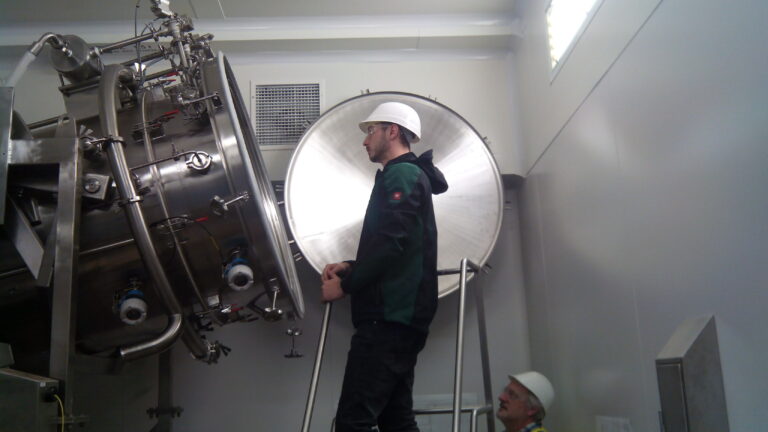
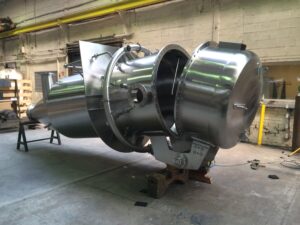
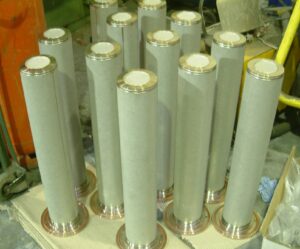
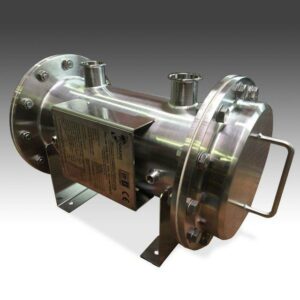
In these sort of environments, the correct product collector is essential to ensure contamination is reduced to a minimum. The Pennaire Clean-in-place (CIP) filters are designed specifically for these applications, as this unique design is a self-cleaning filtration system designed to be cleaned without disassembly, providing a continuous flow of operations and is ideal for these specific industries.
High Efficiency Particulate Air (HEPA) filtration is the benchmark in cleanroom environments. HEPA filters are capable of capturing 99.97% of particles at 0.3 microns, the particle size considered most difficult to filter. In the most demanding applications, Ultra Low Penetration Air (ULPA) filters offer an even higher level of filtration efficiency, capturing particles down to 0.12 microns.
However, specifying the right filter media is only part of the solution. The airflow patterns through to the construction of the filter housing and the method of filter changeout, needs to be carefully considered. In pharmaceutical and food-grade cleanrooms, filter housings and internal components must be manufactured from materials that can withstand rigorous cleaning regimes, including Clean-in-Place (CIP) and Wash-in-Place (WIP) processes.
Getting it right from the start
As with all demanding filtration applications, the right outcome in a cleanroom environment begins with the right design. Understanding the classification requirements, the nature of the process being protected, and the specific contamination risks involved allows a competent filtration engineer to specify a system that performs reliably and consistently, without compromise.
At Pennaire Filtration, we have extensive experience designing and supplying filtration solutions for cleanroom and controlled environments, including HEPA filter units and WIP/CIP-compatible systems built to the exacting standards these applications demand. If you are planning a new cleanroom installation or reviewing the performance of an existing filtration system, our team is ready to help.