Industrial Dust Control
Design – Manufacture – Installation – Service – Spares
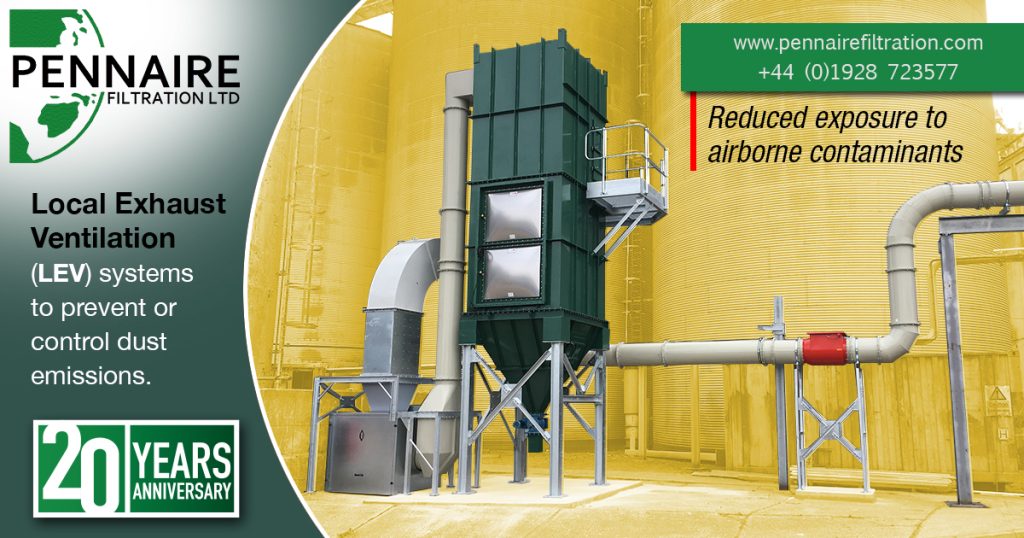
Understanding what a Local Exhaust Ventilation system (LEV) is, and how one works, is critical for businesses needing to manage air quality at their premises.
Dust, fumes, mist, vapours and gases – all of them byproducts of everyday industrial or manufacturing processes – can pose serious risks to workplace safety, employee health, as well as the local environment.
One of the ways an employer can maintain a setting for staff, while also meeting their regulatory obligations, is by installing an LEV system.
In simple terms, an LEV system is a method of engineering control in a range of industrial, manufacturing, and other settings to capture any airborne contaminants at source and remove them from a working environment.
It supplements general ventilation, providing a targeted means of extraction where those contaminants are generated.
The purpose of LEV is to:
Identifying local exhaust ventilation components helps us to understand how this type of system functions.
While designs can vary depending on a specific application and its installation, most LEV systems include:
Usually positioned close to the source of the contaminants, capturing them as they’re produced
A network of pipes that transport contaminated air away from the source (and surrounding environment)
Removes any harmful particles from the air before it is discharged or recirculated
Creates the airflow required to draw contaminants through the filtration system
Where clean air is safely released back into the atmosphere or workspace
All of these need to be working efficiently together to ensure the system is performing as intended.
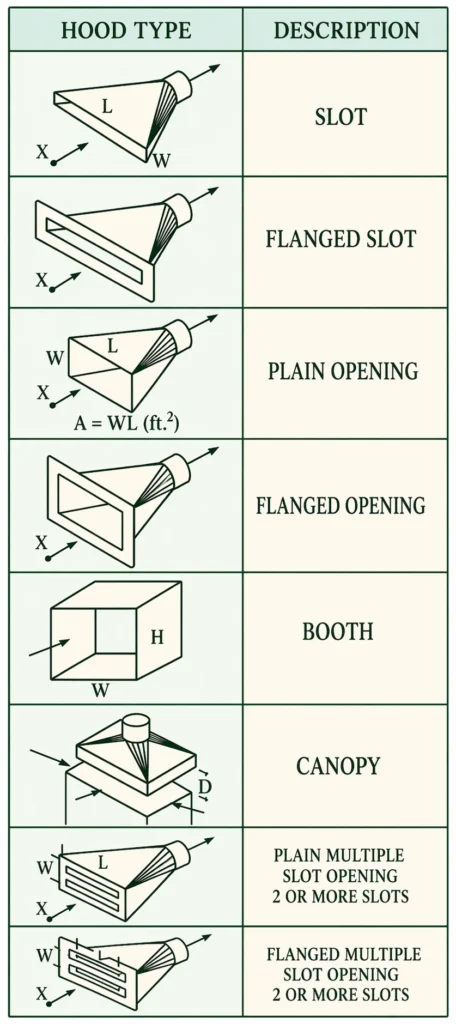
As described above, a LEV system creates a controlled airflow that captures contaminants at the point where they’re generated during an industrial or manufacturing process.
A good example is cutting (or grinding).
This technique produces excess dust, creating fine particulate matter that has the potential to create long term hazard to health.
An LEV hood is positioned carefully to capture dust as it’s generated, preventing dispersal into the surrounding air.
A fan pulls the contaminated air through the ducting system, and into a filter or air cleaning unit. The particles are then removed before the air is recirculated or safely discharged.
Getting it right depends on:
There are several different types of LEV systems, each suited to different industries and applications.
Selecting the most appropriate one depends on the type of contaminants, and how they’re generated.
Some of the most common types include:
Selecting the most appropriate LEV solution requires careful consideration of your materials, processes, and working environment.
Some of the factors to take into account include:
However, every application is different and provides it’s own specific factors to overcome when designing the correct LEV system. A badly designed system can fail to effectively control hazards, even if all the necessary components are present.
For that reason, it’s essential to work with an expert to ensure that your system is designed, installed, and maintained to provide reliable long-term performance as well as regulatory compliance.
At Pennaire Filtration, we provide a comprehensive LEV design, installation, and maintenance service that’s informed by engineering know-how developed over years.
Our dust extraction equipment and LEV testing and assessment services ensure reliable long-term performance and regulatory compliance.
This website uses cookies to ensure you get the best experience from our website.