

Industrial Dust Control
Design – Manufacture – Installation – Service – Spares
All food processing environments demand the highest standards possible when it comes to cleanliness, safety and efficiency. When manufacturers are working with ingredients such as chocolate, flour and sugar, these standards can be difficult to maintain due to the unavoidable by‑product they all have in common – dust.
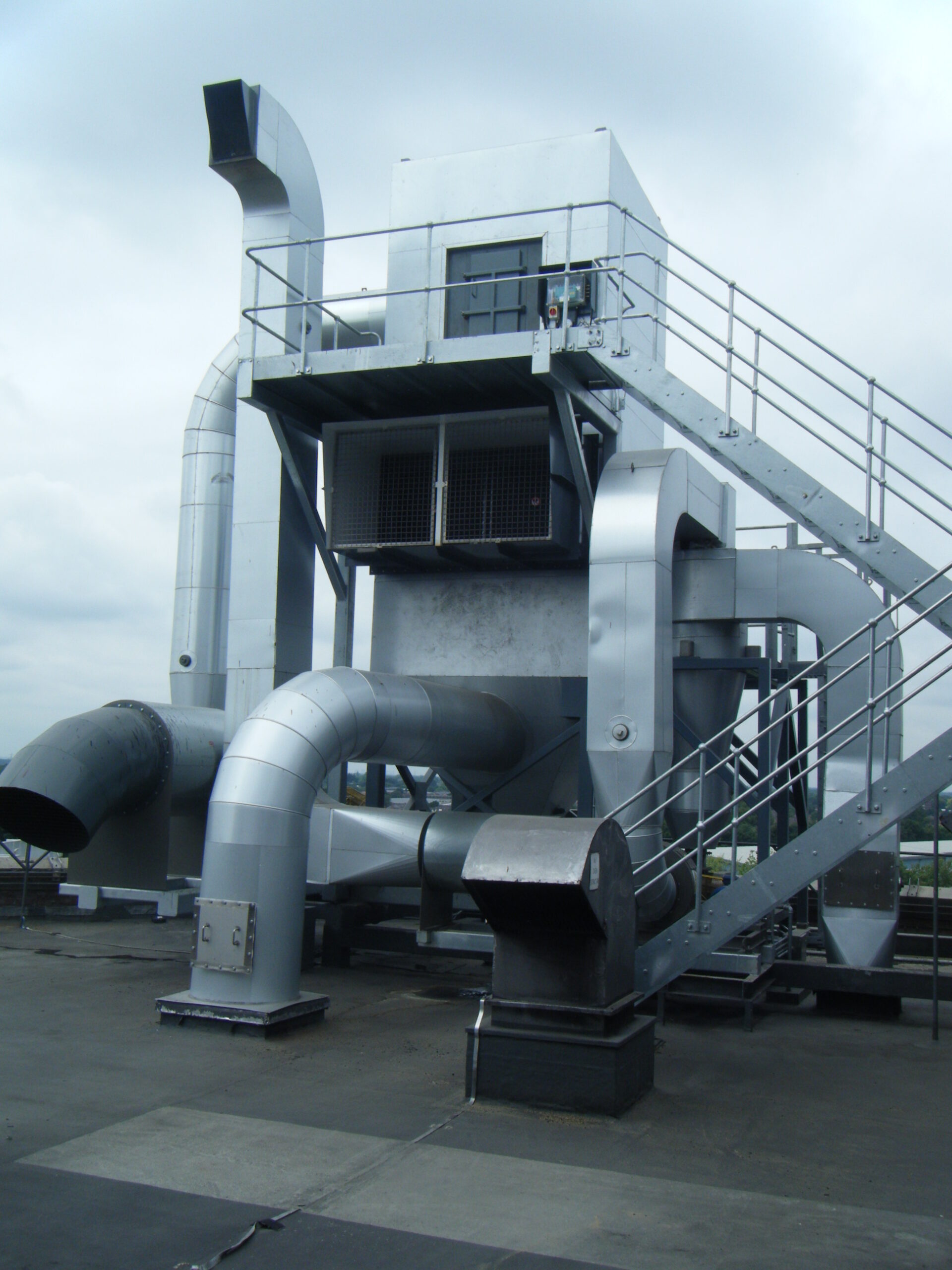
If these fine airborne particles are left untreated, they can pose serious risks to product quality, worker health, equipment performance and regulatory compliance. If dust is allowed to build up, it can lead to bacteria growth, with very serious consequences for food manufacturers. At Pennaire Filtration, we work closely with food manufacturers to understand these challenges so we can deliver tailored dust control solutions.
Ingredients like flour, cocoa powder and sugar generate fine dust at multiple points throughout the production process, from weighing and mixing through to conveying, tipping, and packaging. Each type of material also presents its own specific filtration challenges that we have to work out a way of overcoming.
Flour dust is extremely fine and easily airborne. This means it can get everywhere quickly and then, when it finally settles, it creates slip hazards. Flour dust can be a threat to health, irritating workers’ throats and lungs, even contributing to conditions such as asthma. It also gathers inside machinery, which can lead to loss of efficiency and even to mechanical breakdown.
Sugar dust is very sticky and absorbs moisture from the air, which makes it even stickier. This means it can block up machinery and filters, even those designed to control it, in turn leading to more time needed to clean up, and downtime for machinery too. If the filtration systems are not well designed, sugar dust can also have severe implications for extraction efficiency.
Chocolate and cocoa dust often contain fats, so they are prone to coating filters and other surfaces and can prove extremely challenging to filter. The fats mean they can be highly combustible too, so present a fire risk as well.
With each type of food processing producing dust with its own particular challenges, there is one challenge that is consistent throughout the food industry – combustible dust. The explosive nature of the majority of food processing dust means that the correct ATEX considerations must be taken into account to ensure that all workers remain safe on site during any potential dust explosion.
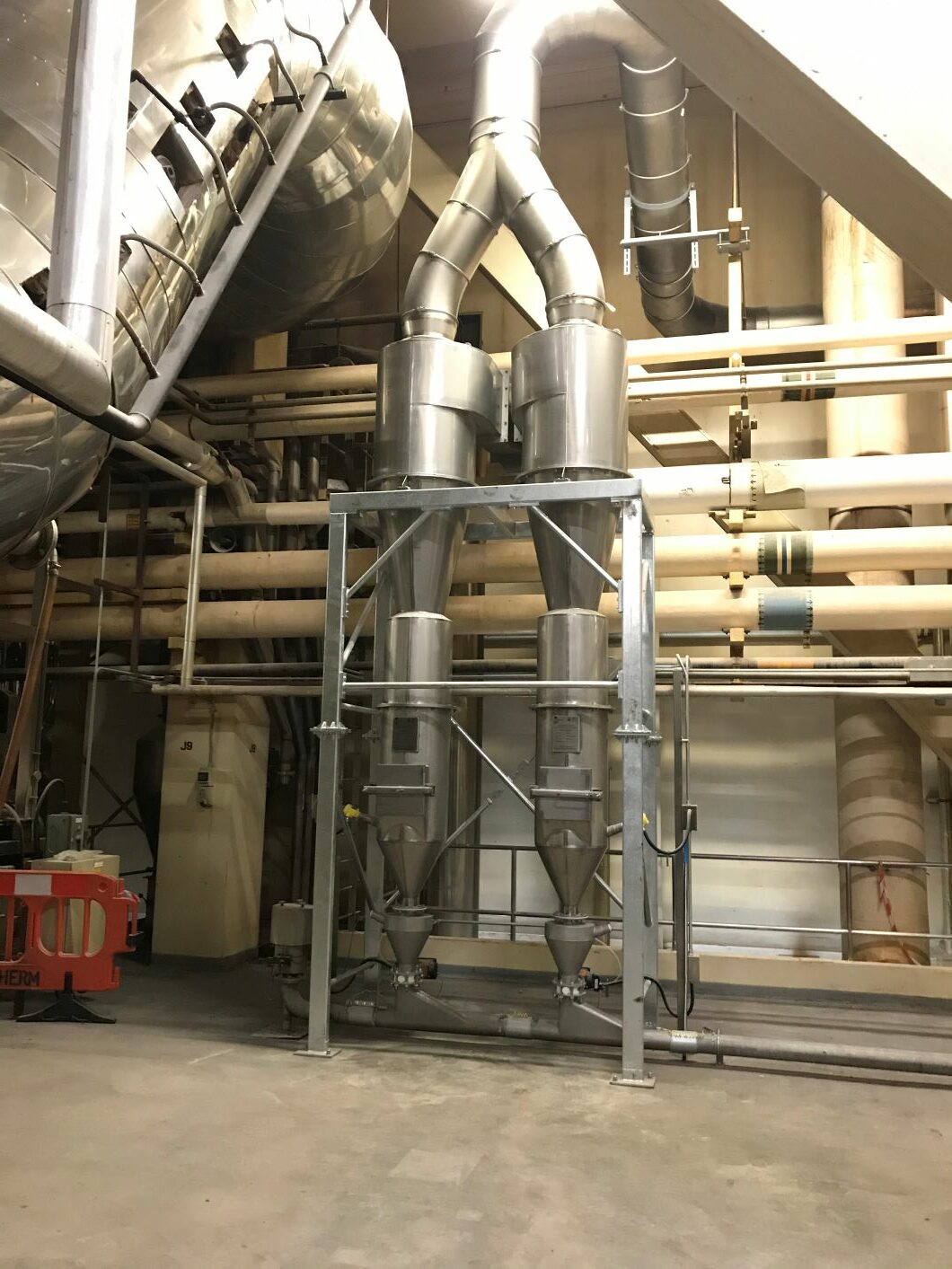
Food factories vary a great deal. Production volumes, the layouts of the factory floor, different ingredient handling methods and stringent hygiene requirements all influence the type of dust control system needed. Having a bespoke system designed to the specific needs of the factory is essential. Designing the right system means having a thorough understanding of every stage of the process.
Pennaire Filtration has built a reputation for designing and delivering dust control systems that work, regardless of the challenges our clients face.
In consultation with our customers, we take time to understand where dust is generated, how the flow of products, air and people work, and the specific requirements for hygiene, maintenance and access. Once we have gained that understanding, we design a filtration system which is suitable for food-grade environments, matched to the dust type, including the particle size, designed to minimise potential blockages and the need for ongoing maintenance, and is compliant with all safety regulations too.
Solutions may include local exhaust ventilation (LEV), centralised dust extraction, high‑efficiency filter units, explosion protection measures, and controlled air balance systems, all carefully configured to suit a customer’s specific requirements.
We design, manufacture and install systems that integrate smoothly into existing facilities, while minimising disruption to production as far as possible. Once a system is installed, as part of our long-term partnership with customers we provide ongoing technical support to ensure performance is optimised.
Effective dust control protects people, products and productivity. For food processors working with dusty ingredients like chocolate, flour and sugar, investing in the right filtration solution is a vital step towards safer, cleaner and more efficient operations.
Often in food manufacturing environments you can do more than simply dispose of unwanted dust. Pennaire can actually design equipment that collects this ‘nuisance dust’ for other products. Sometimes it can be put back into the process, or it may even be re-purposed as another product, turning waste into profit. For example, cereal manufacturers can turn dust generated from their manufacturing process into animal feed.
Contact us today to find out how we can help you build a resilient and compliant manufacturing environment.


This website uses cookies to ensure you get the best experience from our website.